 CATEGORIES
Why Choose Diode Laser for Clinical Practice?
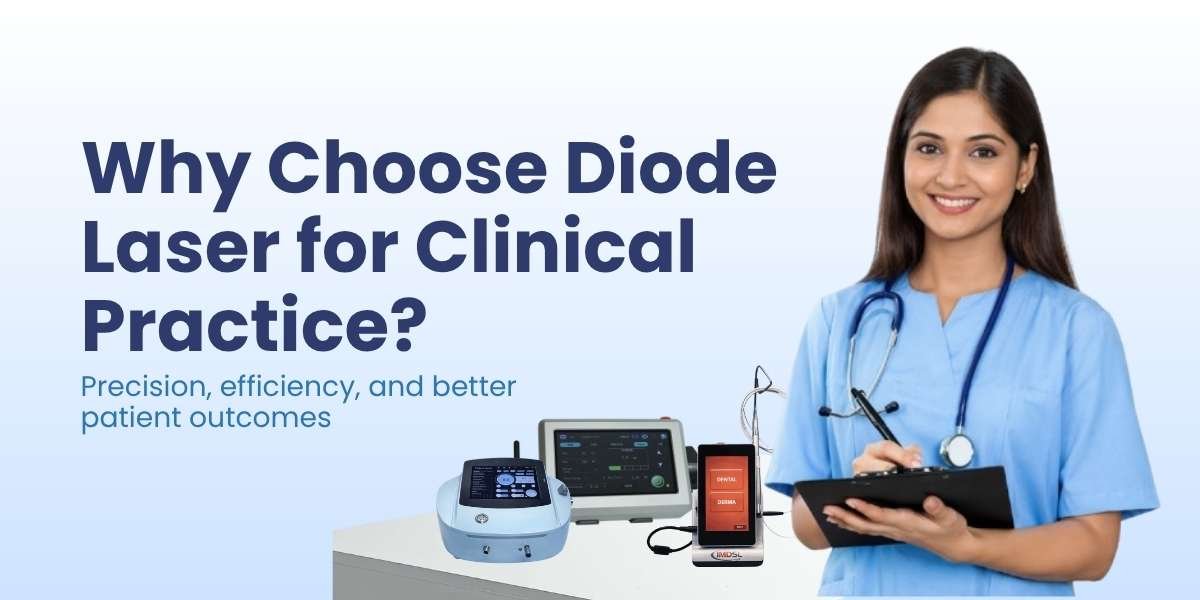
In today’s rapidly evolving medical landscape, clinicians are constantly seeking technologies that enhance precision, improve patient comfort, and deliver better outcomes. One such innovation that has gained significant traction across specialties is the diode laser. Whether in dentistry, dermatology, proctology, or physiotherapy, diode lasers have become a reliable and versatile tool in modern clinical practice.
What is a Diode Laser?
A diode laser is a semiconductor-based laser that emits light in specific wavelengths, typically ranging from 810 nm to 1470 nm. These wavelengths are highly effective in targeting soft tissues, hemoglobin, and water, making diode lasers ideal for a wide range of minimally invasive procedures.
Their compact size, portability, and efficiency make them a preferred choice for clinics aiming to integrate advanced technology without requiring complex infrastructure.
Key Advantages of Diode Laser in Clinical Practice
1. Minimally Invasive Procedures
One of the biggest advantages of diode lasers is their ability to perform procedures with minimal tissue damage. Unlike traditional surgical methods, diode lasers offer precise cutting with reduced trauma, leading to faster healing and less postoperative discomfort.
2. Excellent Hemostasis (Bleeding Control)
Diode lasers coagulate blood vessels as they cut, ensuring a bloodless surgical field. This is especially beneficial in procedures involving highly vascular tissues, improving visibility and reducing procedure time.
3. Reduced Pain and Faster Recovery
Patients treated with diode lasers often experience significantly less pain during and after procedures. The laser’s ability to seal nerve endings contributes to reduced discomfort and quicker recovery times, enhancing overall patient satisfaction.
4. Versatility Across Specialties4
Diode lasers are widely used in multiple clinical fields, including:
- Dentistry – Soft tissue surgeries, gingivectomy, periodontal therapy
- Dermatology – Hair removal, skin rejuvenation, lesion removal
- Proctology – Hemorrhoids, fissures, fistula treatments
- Physiotherapy – Pain management and tissue healing
This multi-specialty application makes diode lasers a cost-effective investment for clinics offering diverse treatments.
5. Compact and User-Friendly Design
Modern diode laser systems are lightweight, portable, and easy to operate. With intuitive interfaces and minimal maintenance requirements, clinicians can adopt this technology without extensive training or setup.
6. Enhanced Precision and Control
Diode lasers allow clinicians to work with high accuracy, targeting only the intended tissue while preserving surrounding structures. This precision is crucial in delicate procedures, ensuring optimal clinical outcomes.
7. Lower Operational Costs
Compared to larger laser systems like CO₂ or Nd:YAG lasers, diode lasers are more affordable and energy-efficient. Their durability and low maintenance contribute to long-term cost savings for clinics
.
8. Improved Infection Control
The laser’s thermal effect helps sterilize the treatment area, reducing the risk of infections. This added safety benefit is particularly important in surgical and dental procedures.
Why Diode Laser is a Smart Investment4
Investing in a diode laser is not just about upgrading technology—it’s about transforming clinical practice. With increasing patient awareness and demand for minimally invasive treatments, clinics equipped with laser technology stand out in a competitive healthcare market.
Additionally, diode lasers enable practitioners to expand their service offerings, improve efficiency, and attract more patients seeking advanced care options.
Conclusion
Diode lasers have revolutionized modern clinical practice by combining precision, versatility, and patient comfort. Their ability to deliver minimally invasive, efficient, and safe treatments makes them an indispensable tool for today’s healthcare professionals.
Choosing a diode laser is not just a technological upgrade—it’s a step toward better clinical outcomes, enhanced patient experience, and long-term practice growth.